Compare complete treatment programmes
Hangzhou, China
Yong Cui
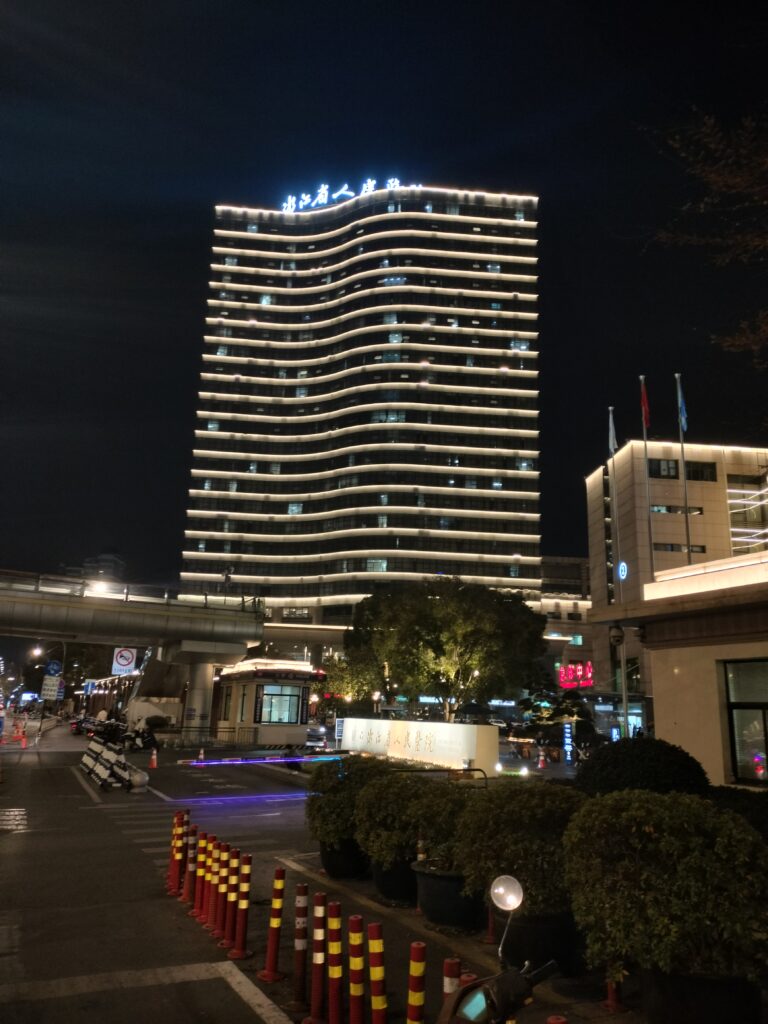
Zhejiang Provincial People’s Hospital
A 4–5 cm underarm incision keeps the breastbone intact: no divided breastbone to heal while you rebuild walking and everyday activity.
$25,000–40,000 estimated cost
USD · estimated programme range · updated 8 October 2026.
Published 100-patient MESM series; separate 132-patient mid-cavity conference report and earlier 148-patient modified-Morrow study.
Cleveland, United States
Nicholas Smedira
Cleveland Clinic HCM Center
Specialist HCM imaging and myectomy that can also correct mitral-leaflet or papillary-muscle causes of obstruction.
Quote on request
Individual estimate after assessment.
A historical series of 1,559 LVOT operations, including 1,530 myectomies and 522 myectomies with mitral or subvalvular intervention.
New York, United States
Daniel Swistel · Joshua Scheinerman
NYU Langone Hypertrophic Cardiomyopathy Program
An HCM team that treats septal and mitral causes of obstruction, with conventional and selected robotic surgical approaches.
Quote on request
Individual estimate after assessment.
NYU reports more than 600 myectomies at programme level. Supporting method evidence includes a historical 77-patient anatomy study and a separate first robotic case report.
What keeping your breastbone intact changes
The practical advantage is more than a smaller scar: the sternum is not divided. After a sternotomy, everyday movements such as pushing out of a chair, lifting a shopping bag or getting out of bed have to take the healing breastbone into account.
Guy’s and St Thomas’ describes about three months for full breastbone healing after sternotomy and gives different movement guidance for approaches between the ribs. Preserving the sternum removes that bone-healing step; the incision and the heart still recover gradually.
| Recovery detail | Sternotomy | Cui’s planned underarm MESM access |
|---|
| Breastbone | Divided and secured after surgery; bone healing continues over the following months. | Left intact; no sternotomy bone wound to heal. |
|---|
| Everyday upper-body movement | Movement and lifting guidance protects the healing sternum. | No divided sternum to protect; activity progresses with wound comfort and the clinical recovery plan. |
|---|
| Incision and scar | An incision along the front of the chest. | A 4–5 cm incision beneath the right arm in the published MESM series. |
|---|
Sources: MESM: 100-patient observational study · Guy’s and St Thomas’: breastbone healing and movement after heart surgery · Mayo Clinic: minimally invasive surgery
Obstruction only during exercise? Find your pathway
A resting scan can miss the degree of dynamic obstruction that appears with exertion. If your report mentions latent obstruction, exercise-induced LVOTO, SAM or papillary-muscle abnormalities, use the dedicated guide to understand what a specialist review should address.
Sources: 2024 HCM guideline: official teaching slides
When does septal reduction enter the discussion?
This comparison concerns adults with obstructive HCM. The specialist must link limiting symptoms to obstruction despite appropriate treatment. A resting or provoked LVOT gradient of at least 50 mmHg generally supports consideration of advanced treatment; the number alone does not establish a need for surgery.
The 2024 guidance advises against septal reduction in asymptomatic people with normal exercise capacity. Some patients with less severe symptoms merit earlier expert consideration because of other findings. Nonobstructive and apical HCM have a separate pathway.
Sources: 2024 HCM guideline: official teaching slides
Medicines, myectomy or alcohol septal ablation?
Initial treatment usually uses a non-vasodilating beta blocker, followed by verapamil or diltiazem if appropriate. Persistent symptoms prompt a shared discussion of further drug treatment or septal reduction at an experienced HCM centre. The options are not a mandatory sequence in which every patient must try every drug before a procedure.
| Option | What it changes | What makes the choice different |
|---|
| Further medical treatment | Can reduce symptoms and, in obstructive HCM, the gradient without removing muscle. | Disopyramide or a cardiac myosin inhibitor may be considered. Response, interactions, monitoring and continued access matter. |
|---|
| Septal myectomy | A surgeon removes selected thickened septal muscle to enlarge the outflow pathway. | Surgical myectomy can treat the obstructing muscle alongside mitral or papillary-muscle correction, or coronary bypass, when those problems also require surgery. |
|---|
| Alcohol septal ablation | A catheter delivers alcohol through a suitable small coronary branch to create controlled injury in the target septum. | Useful when surgery is contraindicated or its risk is unacceptable. Requires suitable coronary anatomy; it cannot surgically correct associated valve or papillary-muscle abnormalities. |
|---|
Sources: AHA/ACC HCM guidance (2024) · Septal myectomy: procedure and risks · Alcohol septal ablation: procedure and risks · 2024 HCM guideline: official teaching slides
Myosin inhibitors: evidence, monitoring and access
Mavacamten and aficamten are examples of cardiac myosin inhibitors with US approvals for symptomatic obstructive HCM; access and approved use differ by country. The FDA’s aficamten evidence came from a placebo-controlled trial in 282 adults, with the primary exercise-capacity assessment at 24 weeks. This was not a comparison against myectomy or septal ablation.
Mavacamten can reduce pumping strength excessively and cause heart failure. Treatment includes repeated echocardiography and review of interacting medicines, including after returning home; symptom relief does not remove that monitoring burden.
Sources: MYQORZO (aficamten): FDA drug trials snapshot · CAMZYOS prescribing information, April 2025 revision
An infra-axillary approach to myectomy: Yong Cui’s published work
Yong Cui / Cui Yong (崔勇) is a cardiovascular surgeon associated with Zhejiang Provincial People’s Hospital in a 2024 JTCVS Techniques publication. The published discussion describes transaortic septal myectomy through a right infra-axillary incision.
The clinical connection is specific: an alternative route to a myectomy for selected obstructive HCM cases. It does not establish that this approach is suitable for every patient or that its results surpass programmes using another route.
Cui’s practice website describes his department-lead role and trans-axillary valve work. The HCM publications provide more specific evidence: they identify the operation, patient cohort, haemodynamic results and complications.
Sources: An innovative minimally invasive approach for HOCM: transaortic septal myectomy via right infra-axillary incision · Yong Cui practice profile
Septal myectomy cost: programme budgets and individual quotes
A useful myectomy quote should specify septal muscle removal and any planned work on the mitral valve, chordae or papillary muscles. These are different operative scopes. A small-incision technique name alone does not tell you what the package includes.
The Cui HCM programme in Hangzhou has an estimated cost of $25,000–40,000 USD. The final quotation reflects the myectomy plan, any additional valve work and the hospital-care scope. Cleveland and NYU provide individual estimates.
| Programme | Price basis | Included detail available |
|---|
| Yong Cui / Zhejiang | $25,000–40,000 estimated programme cost | Programme budget; standard ICU, room and follow-up allowances are not itemised |
|---|
| Cleveland HCM | Individual estimate | A clinical pathway is published; no standard myectomy package tariff was found |
|---|
| NYU HCM | Individual estimate | Multidisciplinary HCM assessment; no standard myectomy package tariff was found |
|---|
Sources: AHA/ACC HCM guidance (2024) · An innovative minimally invasive approach for HOCM: transaortic septal myectomy via right infra-axillary incision · Surgical management of LVOT obstruction in a specialized HOCM center
What improves after myectomy, and what care continues
Relieving obstruction can improve symptoms caused by restricted outflow. The operation does not remove the underlying need for HCM surveillance.
- Follow-up imaging measures the remaining outflow gradient and mitral leakage.
- Rhythm and sudden-death risk assessment remain separate from the success of muscle removal.
- Genetic counselling and family screening may still be relevant after surgery.
Sources: AHA/ACC HCM guidance (2024)
Specialists for this treatment pathway
Explore each specialist’s clinical focus, current programme and the studies relevant to this treatment. The listed roles include cardiac surgeons and, where appropriate, interventional cardiologists.
Continue your guide
Related heart surgery guides