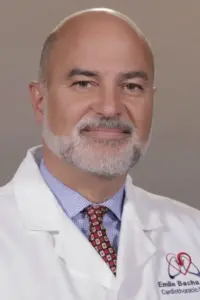
Rochester, Minnesota · United States
cardiac surgeon
Joseph A. Dearani →
Dearani’s Mayo practice includes paediatric and adult congenital surgery, congenital valve repair and Ebstein anomaly.
Sources: Mayo Clinic · Joseph Dearani
Congenital heart disease · Decision guide
Find the right congenital team, understand why age and previous repairs matter, and prepare a defect-specific review.
Congenital heart conditions need a team matched to the defect and the patient’s age. Some openings or narrowed valves can be treated by catheter; others require reconstruction or ongoing monitoring.
ASD, VSD, pulmonary stenosis and complex congenital anatomy are different treatment problems.
Sources: Types of congenital heart defects
Childhood repair does not eliminate later valve, rhythm or reoperation needs.
Boston Children’s, Columbia and Mayo profiles describe different paediatric and adult congenital expertise.
Free Bookimed support. Compare options before deciding.
These are starting points within a shared congenital guide; they do not yet have five separate detailed articles. Complex defects need their own specialist interpretation.
| Examples in a report | What the review should clarify |
|---|---|
| Atrial septal defect (ASD) | Location and anatomy of the opening, its effect on the heart and whether intervention is needed |
| Ventricular septal defect (VSD) | Size, location and associated abnormalities |
| Patent ductus arteriosus (PDA) | Its effect on circulation and suitable treatment route |
| Pulmonary stenosis | Site of narrowing and valve or vessel anatomy |
| Tetralogy of Fallot or complex anatomy | The full set of abnormalities and the previous or planned stages of care |
Sources: Types of congenital heart defects
The NHS describes specialist referral, monitoring and treatment ranging from medicines to surgery according to the condition. Adults still need congenital expertise after childhood repair; later valve, rhythm or other interventions may be necessary.
Sources: Congenital heart disease · ACC/AHA adult congenital guidance (2025)
The same defect can need different management in an infant, an older child or an adult after previous repair. A congenital programme combines surgical and cardiology expertise with the history of the whole heart.
Sources: ACC/AHA adult congenital guidance (2025) · Congenital heart disease
The specialist section below links dedicated congenital programmes at Boston Children’s, Columbia and Mayo. Congenital expertise depends on the defect and age group: newborn repair, childhood reoperation and adult congenital surgery involve different anatomy and care pathways.
Explore each specialist’s clinical focus, current programme and the studies relevant to this treatment. The listed roles include cardiac surgeons and, where appropriate, interventional cardiologists.
Rochester, Minnesota · United States
cardiac surgeon
Dearani’s Mayo practice includes paediatric and adult congenital surgery, congenital valve repair and Ebstein anomaly.
Sources: Mayo Clinic · Joseph Dearani
Boston · United States
cardiac surgeon
Emani’s Boston Children’s programme assesses whether complex ventricular and outflow anatomy can support a two-ventricle repair.
Sources: Biventricular repair linked to better outcomes in superior-inferior ventricles treatment · Sitaram Emani — research and clinician directory
New York · United States
cardiac surgeon
Bacha’s Columbia practice spans paediatric and adult congenital surgery, including valve reconstruction and complex neonatal repair.
Sources: Emile A. Bacha, MD — surgeon profile · Pediatric Heart Surgery at Columbia
Continue your guide
Free Bookimed support. Compare options before deciding.
Free Bookimed support. Compare options before deciding.