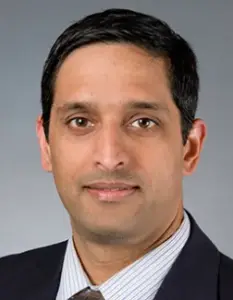
Complex two-ventricle reconstruction and conduction protection · Boston, United States
Research by Yevhenii Kozlov · Co-Founder of BookimedUpdated 8 October 2026Sources linked throughout
At a glance
Sitaram Emani co-directs Boston Children’s Complex Biventricular Repair Program. The work focuses on whether unusual ventricular connections, valves and outflow routes can be reconstructed so that both ventricles support circulation.
Anatomy-specific reconstruction
The programme uses detailed planning and 3D models for difficult ventricular relationships, with tailored outflow and valve reconstruction.
Your diagnosis, selected specialist and treatment priorities.
Benefits and limitations
Potential advantages
Tailored reconstruction can establish two-ventricle circulation in selected complex congenital anatomy, while conduction mapping addresses an important repair risk.
Yasui evidence applies to two adequate ventricles with VSD and aortic atresia or interrupted arch, not an isolated VSD. The mapping study was observational and did not eliminate pacemaker risk.
A 2024 programme study compared intraoperative conduction mapping with unmapped complex repairs. Lower postoperative heart-block/pacemaker frequency occurred in selected anatomical subgroups.
How to interpret this: Observational comparison; risk was not eliminated and not every subgroup benefited. Results belong to the programme.
The historical Yasui series describes preservation of ventricular function alongside a substantial later burden of right-ventricle-to-pulmonary-artery conduit reoperation.
How to interpret this: Only 25 selected patients treated across 1989–2021; no personal success rate or prediction for a new child.
Boston Children’s Complex Biventricular Repair Program evaluates difficult ventricular relationships using detailed imaging and 3D models. Its research addresses both protection of the conduction system during repair and the later burden of conduit procedures.