Valve-sparing aortic root surgery evidence comparison · Decision guide
Valve-sparing aortic root surgery surgeon rankings: experience, methods and results
8 surgical teams · 2 clinical studies · expertise, methods and reported experience.
Research by Yevhenii Kozlov · Co-Founder of BookimedUpdated 8 October 2026Sources linked throughout
At a glance
Compare valve-sparing aortic root surgery surgeons and programmes by the operations they offer, relevant experience and clinical results. Each team has one card, with its studies grouped underneath. Reported practice totals carry their source; study samples stay beside their own results.
8 teams · 2 studies
One card per surgical team. Clinical studies remain separate inside each card, with their own dates and results.
Free Bookimed support. Compare options before deciding.
Valve-sparing aortic root surgery surgeons and specialist teams
Cards follow the selected procedure’s default experience comparison above. Providers without a comparable public count retain their clinical profiles without a numbered position.
Specialist expertiseValve-sparing aortic root
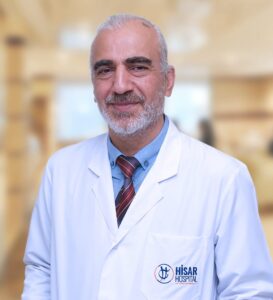
Ali Fedakar
Hisar Hospital Intercontinental
cardiovascular surgeon
Ali Fedakar’s Hisar practice explicitly includes second and third valve operations, coronary bypass and aortic surgery. His background is particularly relevant to patients whose new operation must account for an earlier valve or bypass procedure.
Emmanuel Lansac is listed in Pitié-Salpêtrière’s cardiac surgery service. His technique-focused research combines root remodelling with an external ring supporting the valve annulus, aiming to retain the natural aortic valve.
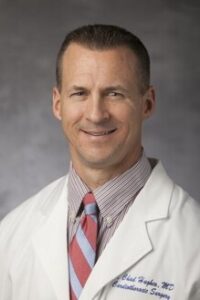
G. Chad Hughes’s Duke practice covers aortic valve repair, valve-sparing root replacement and disease extending to the arch and thoraco-abdominal aorta. His team has also published late limitations of a specific repair device.
Native-valve preservation with a large bicuspid-valve subgroup.
472 patients had bicuspid valves; 1,047 had associated cusp repair. Fifteen-year freedom from reoperation was 94% for tricuspid versus 84% for bicuspid valves.
Native-valve preservation with a large bicuspid-valve subgroup.
1189 valve-preserving root-remodeling patients in this study
1995–2022 · published 2023
472 patients had bicuspid valves; 1,047 had associated cusp repair. Fifteen-year freedom from reoperation was 94% for tricuspid versus 84% for bicuspid valves.
Results: Full-text estimate: 88% freedom from valve reoperation at 20 years; 77% freedom from regurgitation grade 2 or greater at 15 years.
Follow-up: Mean 6.7 ± 5.5 years; 95% follow-up completeness.
Study context: Historical Saarland/Homburg programme cohort, not a personal count. Schäfers was director until 2023 and is now Senior Consultant at Westpfalz. Technique and selection changed over time. Kaplan–Meier freedom from reoperation cannot be directly compared with Toronto’s competing-risk estimate. A valve can leak without having been reoperated on.
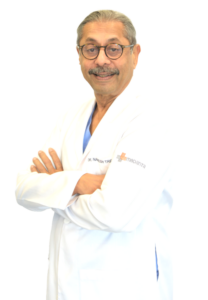
Naresh Trehan is Medanta’s chief cardiac surgeon. The official service listing spans CABG, valve repair and replacement, aortic disease and complex repeat operations, providing a broad surgical setting when several cardiac problems coexist.
Peter Munk Cardiac Centre, Toronto General Hospital
total-arterial minimally invasive CABG
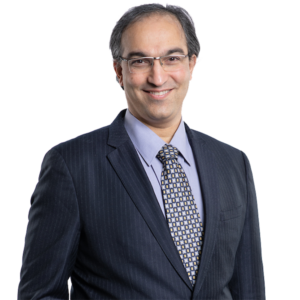
Piroze Davierwala directs the minimally invasive cardiac-surgery programme at UHN. Its coronary service includes selected multivessel total-arterial CABG through an incision between the ribs without heart–lung support.
Follow both reoperation and recurrent leakage when judging durability.
At 20 years, estimated valve-reoperation probability was 6.0% with death treated as a competing risk; moderate or severe aortic insufficiency was 10.2%.
Follow both reoperation and recurrent leakage when judging durability.
465 aortic-valve reimplantation patients in this study
1989–2018 · published 2021
At 20 years, estimated valve-reoperation probability was 6.0% with death treated as a competing risk; moderate or severe aortic insufficiency was 10.2%.
Results: 95% confidence intervals: 2.8–12.9% for reoperation and 5.7–17.4% for insufficiency. Only 25 patients were alive and free from reoperation beyond 20 years.
Follow-up: Mean 10 ± 6 years; 98% completeness. This is not 20-year observation of all 465 patients.
Study context: Three attending surgeons contributed. UHN currently lists David and division head Maral Ouzounian; no individual case allocation or appointment availability is established. Selected expert-centre cohort. Do not turn 6% reoperation into “94% durable success”, or transfer historical programme results to an individual surgeon.
Ulrich Rosendahl’s Royal Brompton practice includes valve-sparing aortic-root replacement and reconstruction of the wider aorta. This is relevant when an aneurysm overlaps with valve disease, a previous operation or a connective-tissue disorder.
Procedure-specific evidence makes differences in technique, anatomy and observation period visible before comparing teams.
Trade-offs and limits
These studies are not a matched comparison of the listed surgeons. Personal treatment suitability and risk require clinical assessment.
How to read the comparison
Recruitment dates describe when operations took place; follow-up describes how long patients were observed. Both remain visible beside each study.
Complication and outcome definitions differ. Counts are not pooled, programme cohorts are not automatically personal surgeon totals, and smaller incisions are not treated as proof of better outcomes.