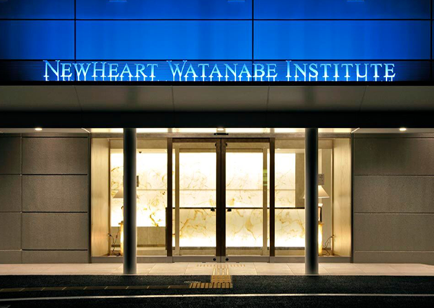
NewHeart Watanabe Institute: heart surgery expertise
Tokyo, Japan · Robotic Barlow repair using an anatomy-specific strategy
Research by Yevhenii Kozlov · Co-Founder of BookimedUpdated 8 October 2026Sources linked throughout
At a glance
NewHeart Watanabe’s published mitral work focuses on Barlow disease, a complex form of prolapse. The team used artificial chordae as its first strategy and added leaflet resection when needed to manage systolic anterior motion.
124 Barlow repairs
The 2015–2022 robotic cohort included 124 selected patients, with no conversion to valve replacement.
Freedom from reoperation does not equal freedom from recurrent leakage. This is an uncontrolled institutional series and does not allocate every repair to director Go Watanabe.
Go Watanabe directs NewHeart Watanabe Institute in Tokyo. Its published Barlow strategy uses artificial chordae first and adds leaflet resection when needed to limit systolic anterior motion.
Watanabe coauthored the 2015–2022 series. None of the 124 patients converted to valve replacement; reported complications included four bleeding events and one stroke. Freedom from reoperation was 99.2% during mean follow-up of 36 months.
How to interpret this: Single-institution observational study without a randomized access comparison. Freedom from reoperation is not the same as freedom from recurrent leakage, and authorship does not allocate every case to one surgeon.