
University of Ottawa Heart Institute · Decision guide

University of Ottawa Heart Institute: heart surgery expertise

Ottawa, Canada · Minimally invasive bypass with recovery and long-term follow-up evidence

Research by Yevhenii Kozlov · Co-Founder of BookimedUpdated 8 October 2026Sources linked throughout

At a glance

Ottawa’s CABG work includes both randomized evidence on the incision and observational evidence on later coronary treatment. The distinction is useful: faster early recovery does not prevent progression of disease in other native arteries.

Measured early recovery

MIST randomized 170 patients suitable for both routes; one-month SF-36 physical-component scores averaged 45.1 with MICS versus 42.2 with sternotomy.

Sources: Multivessel coronary artery bypass grafting via small thoracotomy versus sternotomy (MIST): an investigator-initiated, international, open-label, randomised controlled trial.

Longer-term repeat treatment

In a separate 566-patient cohort followed for a mean seven years, 49 underwent repeat revascularization.

Sources: Revascularization after minimally invasive coronary artery bypass grafting in 566 patients: Is it a problem?

Why repeat procedures occurred

Progression of native coronary disease was the most frequent reason for further revascularization in that cohort.

Sources: Revascularization after minimally invasive coronary artery bypass grafting in 566 patients: Is it a problem?

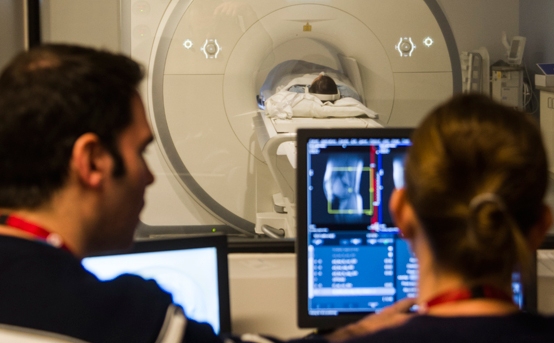
MRI staff viewing a scan at the University of Ottawa Heart Institute
Archive photograph of MRI test scanning at the University of Ottawa Heart Institute, published February 2015. The source identifies the person in the scanner as a staff volunteer. · Image source ↗

Reported surgical experience

1,000+ minimally invasive coronary bypass operations

Programme operations · Cumulative by April 2026; no start in numeric claim · published 2026-04-13 · counting date 2026-04-13

Minimally invasive coronary bypass operations.

50 years of heart: Innovation and teamwork transformed cardiac surgery ↗ · source read 2026-10-08
About 1,000 coronary bypass operations

Programme operations · Annual activity estimate published May 2025; calendar year not specified · published 2025-05-28 · counting date 2025-05-28

All CABG approaches.

The churro-inspired innovation that could transform bypass surgery ↗ · source read 2026-10-08
Get a treatment proposal

Your diagnosis, selected specialist and treatment priorities.

Clinical benefits and limitations

Trade-offs and limits

Specialists and their clinical work

Ottawa · Canada

cardiac surgeon

Marc Ruel →

Marc Ruel studies and performs minimally invasive coronary bypass at Ottawa Heart Institute. His work separates the short-term recovery effect of the incision from longer-term disease progression and repeat treatment.

Sources: Multivessel coronary artery bypass grafting via small thoracotomy versus sternotomy (MIST): an investigator-initiated, international, open-label, randomised controlled trial. · Revascularization after minimally invasive coronary artery bypass grafting in 566 patients: Is it a problem?

Procedure-specific research

Read alongside Marc Ruel’s profile →

MIST: access compared in a randomized trial

Ruel was first author of MIST, which randomized 170 patients suitable for both approaches. MICS CABG improved the physical-recovery score at one month; no deaths or strokes occurred in either group through 12 months.

How to interpret this: Seven-centre trial with experienced teams; 91% were men. Previous cardiac surgery, unstable patients and concomitant procedures were excluded. It cannot establish long-term superiority or a personal complication rate.

Sources: Multivessel coronary artery bypass grafting via small thoracotomy versus sternotomy (MIST): an investigator-initiated, international, open-label, randomised controlled trial.

Read alongside Marc Ruel’s profile →

Continue your guide

Related heart surgery guides

Turn information into your next step.

Free Bookimed support. Compare options before deciding.

Get a treatment proposal

Your diagnosis, selected specialist and treatment priorities.