Bariatric and metabolic surgery: compare your options · Decision guide
Bariatric and metabolic surgery: compare your options
Bariatric surgery treats obesity; “metabolic” describes its effects on conditions such as diabetes.
Free Bookimed support. Compare options before deciding.
Bariatric surgery treats obesity; “metabolic” describes its effects on conditions such as diabetes. This section helps you compare operations and endoscopic treatments, understand their benefits and risks, and explore surgeons, clinics and Bookimed prices abroad. Use it to prepare for a clinical review, not to choose an operation from price or weight-loss figures alone.
Options at a glance
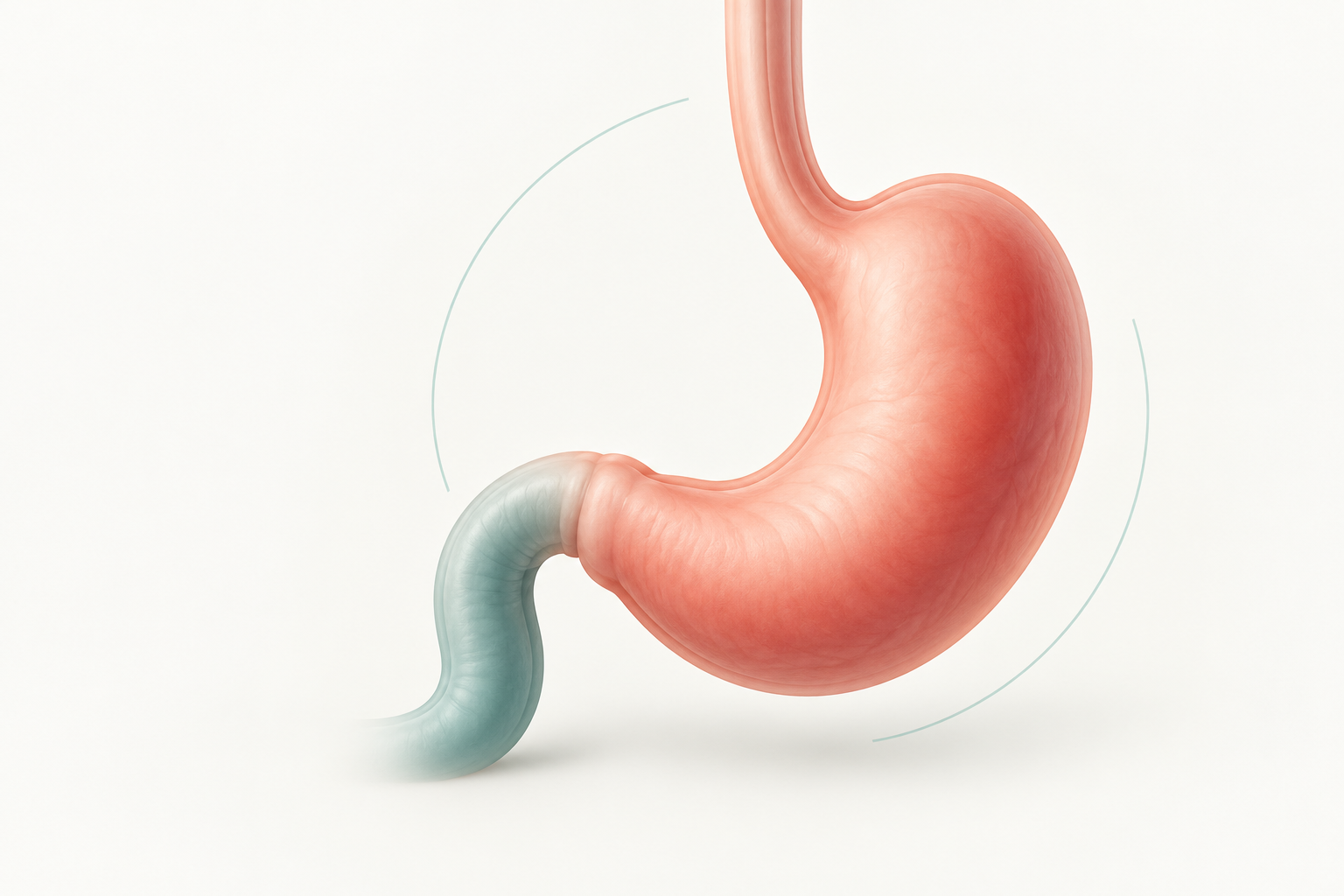
Sleeve gastrectomy removes stomach tissue to leave a smaller stomach. Gastric bypass makes a small stomach pouch and reroutes food through the intestine. An adjustable band sits around the upper stomach without rerouting digestion. [1][2][3]
Endoscopic treatments use a scope passed through the mouth: a gastric balloon temporarily occupies stomach space, while endoscopic sleeve gastroplasty (ESG) folds and stitches the stomach without removing it. Robotic assistance is an approach to performing surgery, not a separate weight-loss operation. Revision changes a previous operation to address weight response or complications.
“Total weight loss” means the share of starting body weight lost. The figures below describe study groups, not a personal prediction. The surgical sleeve, bypass and band results come from the same trial; other rows cover different patients and follow-up periods and cannot be ranked directly against them.
| Method and guide | Who might discuss it with a specialist? | Weight-loss evidence | Main risks and further-treatment signals | Recorded package prices |
|---|---|---|---|---|
| Sleeve gastrectomy | Adults meeting surgical criteria; existing reflux matters when choosing. | Mean total weight loss 19.4% at 3 years after trial allocation. | New or worse reflux—stomach contents rising into the food pipe—and leaks or bleeding. Severe reflux can lead to conversion to bypass. | USD 2500.00–29187.00; median 6174.24 (79 packages; recorded 2026-10-21) Packages and sources |
| Gastric bypass | Adults meeting surgical criteria; Roux-en-Y bypass may be considered when severe reflux affects the choice. | Mean total weight loss 26.8% at 3 years after trial allocation to Roux-en-Y bypass. | Leaks and vitamin or mineral deficiencies; later ulcers and internal hernias, where bowel becomes trapped inside the abdomen. These can require further treatment. | USD 3816.80–29782.00; median 7666.28 (28 packages; recorded 2026-10-21) Packages and sources |
| Adjustable gastric band | Adults meeting surgical criteria who can attend repeated adjustment visits; a European guideline suggests sleeve or bypass over banding. | Mean total weight loss 14.0% at 3 years after trial allocation. | Band slippage, reflux and device problems. Correction, removal or conversion occurred in 52 of 363 band recipients (14%) during trial follow-up. | USD 10103.31–17983.00; median 14043.16 (2 packages; recorded 2026-10-21) Packages and sources |
| Endoscopic treatments: balloon or ESG | Adults meeting endoscopic treatment criteria, alongside lifestyle changes; these differ from surgical criteria. | Balloon: pooled total weight loss 10.7% at removal after 6–8 months. ESG: pooled 17.88% at 1 year, mainly from observational studies. | Balloon: nausea, vomiting and possible early removal. ESG: bleeding, a hole in the digestive tract or blockage; pooled serious-event rate 1.25% in a separate review. | USD 1459.37–8500.00; median 2850.00 (29 packages; recorded 2026-10-21) Packages and sources |
| Robot-assisted surgery | Candidates for the underlying sleeve or bypass operation; the robot does not create separate eligibility. | Results depend on the operation. A sleeve review found similar weight loss with robotic and standard keyhole surgery. | Leaks and bleeding remain possible. A bypass review found 30-day reoperation rates of 4.4% with robotic assistance versus 3.4% with standard keyhole surgery. | USD 6406.00–29782.00; median 20283.00 (4 packages; recorded 2026-10-21) Packages and sources |
| Revisional surgery | People with insufficient weight loss, weight regain or complications after an earlier operation. | No single estimate fits all revisions. For SADI-S, a sleeve-based operation that reroutes the intestine, pooled total weight loss was 23.78% at 12 months after revision. | In that SADI-S review, leaks were reported in 2.9% and nutritional deficiencies in 4.2%; follow-up varied. Other revisions have different risks, and further intervention can be needed. | No public price recorded. Request an individual estimate. |
The surgical trial measured results at 3 years after random allocation, not uniformly after surgery. Pandemic disruption meant some participants had not received their operation or attended follow-up. Its averages help compare treatment choices but are not a timetable for your own weight loss. [230][231]
Sources (13)
- Salih Yilmaz
- How do the bypass operations differ?
- Carlos Ballesta Lopez
- How does a balloon work?
- www.nice.org.uk — source
- Does a robot improve sleeve results?
- Weight loss at one year and diabetes at five years?
- What is a revision and what are the alternatives?
- What weight result was achieved at three years?
- What weight loss is expected?
- What is the recent pooled ESG result?
- What weight loss is reported at one and five years?
- What weight loss was achieved in a large randomized trial?
Who qualifies for surgery?
Body mass index (BMI) relates weight to height. The bariatric surgery guideline recommends surgery at BMI 35 or above, even without a diagnosed obesity-related condition. At BMI 30–34.9, surgery can be considered when nonsurgical treatment has not produced substantial, lasting weight loss or improvement in associated illness. These thresholds support assessment; they do not select a particular operation. [232]
The guideline adjusts thresholds for Asian populations and says surgery should be offered above BMI 27.5. Individual assessment still matters. [234]
Endoscopic treatment has different criteria. Its guideline suggests treatment plus lifestyle changes at BMI 30 or above, or BMI 27.0–29.9 with at least one obesity-related condition. A balloon or ESG is therefore not simply a smaller version of surgical sleeve or bypass. [235][236]
Preparation includes a nutritional assessment and support for dietary changes. The team also assesses disordered eating, severe uncontrolled mental illness and active substance abuse so these can be addressed before surgery. A revision needs an individual review of the previous operation, nutrition and psychological health, often with an internal camera examination and contrast imaging. [237][239]
Results and risks: weigh them together
Sleeve and bypass: weight loss comes with different trade-offs
Sleeve can provide lasting weight reduction, but reflux may develop or worsen despite losing weight. A review reported a BMI reduction of 11.0 at 10 years after sleeve; this is a change in BMI, not a percentage of starting weight. Reflux evidence comes largely from smaller studies with short and varied follow-up. Medical treatment is generally tried before surgery for reflux after sleeve, while severe reflux may prompt discussion of conversion to bypass.
Bypass can produce substantial weight loss, but its forms are not interchangeable. Roux-en-Y bypass uses separate paths for food and digestive juices before they rejoin. One-anastomosis gastric bypass, also called mini bypass, uses a loop connection. Both carry risks of leaks at surgical joins and vitamin or mineral deficiencies, with lifelong supplementation needed. Roux-en-Y can also cause later ulcers, internal hernias and abdominal pain. [244][245][246]
For mini bypass, a review found a weighted mean total weight loss of 31.1% at at least 10 years, alongside an average conversion or revision rate of 5.2%. That evidence came from 5 retrospective studies containing 1,750 patients, with different numbers contributing to each result. A separate review with follow-up of at least 5 years reported bile reflux in 4%, ulcers at the join in 2% and malnutrition in 1%; the authors warned that malnutrition could be underestimated. These rates are not lifetime probabilities and should not be added together. [247][248]
Diabetes may improve after surgery, but improvement is not a promise of a permanent cure. In a review of 22 randomized trials involving 1,500 patients with obesity and type 2 diabetes, bypass had better remission results than sleeve at 1 and 3 years. The difference at 5 years was not statistically significant. Remission means diabetes is no longer meeting the study’s diagnostic criteria; definitions and durability matter when discussing results. [250]
Banding: adjustable, but follow-up and repeat procedures matter
The band can be adjusted without another operation, but it requires repeated visits and can slip, erode into the stomach or develop device problems. In the comparative trial, its lower average weight loss came with a 14% rate of correction, removal or conversion among 363 recipients through 3 years after allocation. Removing or changing the band is a further procedure, not a routine adjustment. [251][252][254]
Balloon and ESG: no stomach removal does not mean no risk
A balloon offers temporary help with weight loss, but benefit can diminish after removal. Pooled trials reported 10.7% total weight loss at removal after 6–8 months and 7.9% at 12 months; different sets of studies contributed to those time points. Pain, nausea and vomiting can lead to early removal. Reporting trials also included stomach ulcer or bleeding in 5 of 650 patients and a hole in the digestive tract in 2 of 653, with varying follow-up. [256][257][258]
ESG stitches rather than removes stomach tissue. A pooled review reported 17.88% total weight loss at 1 year, mainly from observational evidence. A separate safety review reported 194 serious events across 15,398 procedures, with a pooled rate of 1.25%; follow-up varied. Bleeding, perforation—a hole in the digestive tract—and blockage can occur. Continuing follow-up is associated with successful weight loss.
Robotic assistance and revision: ask what the operation is meant to achieve
Robotic assistance has not established a clear overall safety advantage over standard keyhole surgery. A prospective sleeve review found comparable complications and a small BMI advantage at 12 months, but rated all outcomes as very low-certainty evidence. Another bypass review, covering 82,155 patients, found more reoperations within 30 days with robotic assistance: 4.4% versus 3.4%. These are comparisons across studies, not results for a particular surgeon or clinic. [265][267]
Revision can address weight recurrence or problems such as severe reflux after sleeve, but another operation is not the only option. Medicines and endoscopic treatments may also be considered. For revisional SADI-S after band or sleeve, a review of 1,641 cases reported total weight loss of 22.11% at 60 months. It also reported leaks, diarrhoea and nutritional deficiencies across differing follow-up periods. These results cannot predict outcomes for every type of revision. [268][269][270]
Across bariatric surgery, a guideline reports a risk of death around the operation of 0.03%–0.2%. This is not a separate risk estimate for each method or for your health circumstances. Long-term care also matters: lifelong nutritional monitoring and procedure-specific vitamin and mineral supplementation help address deficiencies. Prolonged vomiting or difficulty swallowing needs investigation rather than being accepted as routine recovery. [272][273][274]
Read the method guides and supporting evidence for more detail on study populations, follow-up and limitations.
Sources (26)
- Does sleeve have long-term weight benefit?
- Can sleeve cause or worsen reflux?
- Who may be better suited to sleeve?
- Sixth international consensus conference on sleeve gastrectomy.
- How do the bypass operations differ?
- What is mini bypass weight loss at five years?
- What can cause later pain after RYGB?
- What is mini bypass weight loss at ten years?
- How does sleeve compare with bypass for diabetes remission?
- Carlos Ballesta Lopez
- What is known about long-term weight loss?
- What weight result was achieved at three years?
- How does a balloon work?
- What weight loss is expected?
- How common are early symptoms?
- www.nice.org.uk — source
- What is the recent pooled ESG result?
- What is the five-year ESG result?
- What sustains results?
- Does the latest prospective evidence differ?
- Can another operation be needed soon after bypass?
- What is a revision and what are the alternatives?
- What weight loss is reported at one and five years?
- 2022 American Society of Metabolic and Bariatric Surgery (ASMBS) and International Federation for the Surgery of Obesity and Metabolic Disorders (IFSO) Indications for Metabolic and Bariatric Surgery.
- What happens to eating after surgery?
- What monitoring follows surgery?
How to choose a surgeon and clinic
Start with the surgeon catalogue and clinic catalogue. Compare the proposed operation and the care around it, not just the headline package price. Useful questions for a clinical discussion include:
- Why does this operation fit my health, reflux symptoms and previous treatment? What alternatives should we discuss? [275][276]
- How will the team assess nutrition and readiness before treatment, and support dietary changes afterwards? [277]
- Who will arrange nutritional monitoring and supplements after I return home? For a band, where will adjustments take place? For a balloon, what is the removal plan? [279][280][281]
- How does the team assess and manage complications, and whom should I contact if symptoms develop? [282][283][284]
Featured profiles to explore include 
 Burcin Batman at Hisar Hospital Intercontinental, Turkey,

 Samet Yardimci at Professor Dr. Samet Yardımcı Clinic, Turkey, and

 Ionut Hutopila at Ponderas Academic Hospital, Romania. Their listings provide starting points for comparing care; they do not establish a ranking or predict your outcome. [285][286][287]
For a focused search, open the method’s surgeon and clinic lists in the cost comparison below. A package count describes the available listings, not how experienced a team is or whether a particular patient can receive treatment there.
Sources (12)
- How does bypass compare with sleeve for reflux?
- What is a revision and what are the alternatives?
- 2022 American Society of Metabolic and Bariatric Surgery (ASMBS) and International Federation for the Surgery of Obesity and Metabolic Disorders (IFSO) Indications for Metabolic and Bariatric Surgery.
- What happens to eating after surgery?
- What is known about long-term weight loss?
- How does a balloon work?
- What follow-up is needed?
- What monitoring follows surgery?
- How do bypass conversions compare?
- Burcin Batman
- Samet Yardimci
- Ionut Hutopila
Cost on Bookimed by method
Recorded public package prices, according to the clinics. The median is the middle listed price, not a personal quote. Different procedures and inclusions are not directly comparable. Dates refer to the source collection, not a guarantee of price validity. Confirm the exact procedure, operator, hospital, exclusions and follow-up in a current itemised offer.
Sleeve
USD 2500.00–29187.00; median 6174.24 (79 packages; recorded 2026-10-21) Packages and sources
Compare specialists · Compare clinics
Compare 79 packages, clinics and price sources
Professor Dr. Samet Yardımcı Clinic · Turkey · USD 4000.00–5000.00 · 2 packages
- Laparoscopic Gastric Sleeve with 3 Nutritionist Meals — Transfer Included — USD 4000 Price source · Recorded 2026-10-21 (collection date; validity not supplied)
- Laparoscopic Gastric Sleeve — 5★ Hotel & VIP Transfer All-Inclusive Package — USD 5000 Price source · Recorded 2026-10-21 (collection date; validity not supplied)
Hisar Hospital Intercontinental · Turkey · USD 3893.00–3893.00 · 1 packages
- Premium Gastric sleeve surgery (Sleeve gastrectomy) All Included — USD 3893 Price source · Recorded 2026-10-21 (collection date; validity not supplied)
Meliva Kardiolita Hospital · Lithuania · USD 6300.00–8980.72 · 3 packages
- Gastric Sleeve Surgery by Professor with 200+ Annual Bariatric Surgeries at JCI-Accredited Hospital — USD 7659 Price source · Recorded 2026-10-21 (collection date; validity not supplied)
- Gastric sleeve surgery — USD 8980.72 Price source · Recorded 2026-10-21 (collection date; validity not supplied)
- Gastric sleeve — USD 6300 Price source · Recorded 2026-10-21 (collection date; validity not supplied)
KCM Clinic · Poland · USD 6735.54–6954.00 · 6 packages
- Gastric Sleeve Surgery ( Weight Loss Surgery ) At KCM Clinic 2026 Package 5990 Euro — USD 6735.54 Price source · Recorded 2026-10-21 (collection date; validity not supplied)
- Gastric Sleeve Surgery ( Weight Loss Surgery ) At KCM Clinic 2026 Package 6000 Euro — USD 6735.54 Price source · Recorded 2026-10-21 (collection date; validity not supplied)
- Laparoscopic Gastric Sleeve € 6 000 — USD 6735.54 Price source · Recorded 2026-10-21 (collection date; validity not supplied)
- Gastric Sleeve Surgery ( Weight Loss Surgery ) At KCM Clinic 2026 Package 6000 Euro — USD 6735.54 Price source · Recorded 2026-10-21 (collection date; validity not supplied)
- Gastric Sleeve Surgery ( Weight Loss Surgery ) At KCM Clinic 2026 Package 6000 Euro — USD 6735.54 Price source · Recorded 2026-10-21 (collection date; validity not supplied)
- Laparoscopic Gastric Sleeve € 6 000 — USD 6954 Price source · Recorded 2026-10-21 (collection date; validity not supplied)
Anadolu Medical Center · Turkey · USD 6406.00–7800.00 · 10 packages
- Da Vinci Gastric Sleeve Surgery — Individual Chamber & Transfer Included — USD 6406 Price source · Recorded 2026-10-21 (collection date; validity not supplied)
- Laparoscopic Gastric Sleeve Procedure — USD 7167 Price source · Recorded 2026-10-21 (collection date; validity not supplied)
- Bariatric Surgery Program – Anadolu Sağlık Merkezi — USD 6700 Price source · Recorded 2026-10-21 (collection date; validity not supplied)
- Bariatric Surgery Program – Anadolu Sağlık Merkezi — USD 7521.35 Price source · Recorded 2026-10-21 (collection date; validity not supplied)
- Bariatric Surgery Program – Anadolu Sağlık Merkezi — USD 7521.35 Price source · Recorded 2026-10-21 (collection date; validity not supplied)
- Bariatric Surgery Program – Anadolu Sağlık Merkezi — USD 7521.35 Price source · Recorded 2026-10-21 (collection date; validity not supplied)
- Bariatric Surgery Program – Anadolu Sağlık Merkezi — USD 7521.35 Price source · Recorded 2026-10-21 (collection date; validity not supplied)
- Bariatric Surgery Program – Anadolu Sağlık Merkezi — USD 7521.35 Price source · Recorded 2026-10-21 (collection date; validity not supplied)
- Bariatric Surgery Program – Anadolu Sağlık Merkezi — USD 7521.35 Price source · Recorded 2026-10-21 (collection date; validity not supplied)
- Laparoscopic Sleeve Gastrectomy — USD 7800 Price source · Recorded 2026-10-21 (collection date; validity not supplied)
Atlas University Hospital · Turkey · USD 3300.00–3300.00 · 1 packages
- Premium Gastric Sleeve Surgery by Surgeon with 1,100+ Procedures — VIP Transfer — USD 3300 Price source · Recorded 2026-10-21 (collection date; validity not supplied)
Memorial Şişli Hospital · Turkey · USD 2500.00–5000.00 · 3 packages
- Gastric sleeve surgery (Sleeve gastrectomy) — USD 2500 Price source · Recorded 2026-10-21 (collection date; validity not supplied)
- Gastric Sleeve — USD 3500 Price source · Recorded 2026-10-21 (collection date; validity not supplied)
- Gastric sleeve surgery (Sleeve gastrectomy) — USD 5000 Price source · Recorded 2026-10-21 (collection date; validity not supplied)
Lokman Hekim Istanbul Hospital · Turkey · USD 2918.73–3367.77 · 10 packages
- Sleeve Gastrectomy Surgery Package -Limited Time Special Offer — USD 2918.73 Price source · Recorded 2026-10-21 (collection date; validity not supplied)
- Sleeve Gastroplasty Package — USD 3000 Price source · Recorded 2026-10-21 (collection date; validity not supplied)
- Sleeve Gastrectomy Surgery Package — USD 3087.12 Price source · Recorded 2026-10-21 (collection date; validity not supplied)
- Premium Sleeve Gastrectomy Surgery Package — USD 3087.12 Price source · Recorded 2026-10-21 (collection date; validity not supplied)
- Premium Sleeve Gastrectomy Surgery Package — USD 3087.12 Price source · Recorded 2026-10-21 (collection date; validity not supplied)
- Laparoscopic Gastric Sleeve Surgery- All Inclusive Package — USD 3087.12 Price source · Recorded 2026-10-21 (collection date; validity not supplied)
- Premium Sleeve gastrectomy- All Inclusive Package — USD 3367.77 Price source · Recorded 2026-10-21 (collection date; validity not supplied)
- Laparoscopic Gastric Sleeve Surgery- All Inclusive Package — USD 3087.12 Price source · Recorded 2026-10-21 (collection date; validity not supplied)
- Laparoscopic Gastric Sleeve Surgery- All Inclusive Package — USD 3367.77 Price source · Recorded 2026-10-21 (collection date; validity not supplied)
- Laparoscopic Gastric Sleeve Surgery- All Inclusive Package — USD 3367.77 Price source · Recorded 2026-10-21 (collection date; validity not supplied)
Büyük Anadolu Hospitals (BAH International) · Turkey · USD 3500.00–3500.00 · 1 packages
- Laparoscopic Gastric Sleeve by Surgeon with 20,000+ Bariatric Surgeries — VIP Package — USD 3500 Price source · Recorded 2026-10-21 (collection date; validity not supplied)
Digestive Surgery and Gastroenterology Specialist Centro PAD · Spain · USD 10114.00–10114.00 · 1 packages
- Laparoscopic Sleeve Gastrectomy for Obesity – Premium Package — USD 10114 Price source · Recorded 2026-10-21 (collection date; validity not supplied)
Turan Turan Health Group · Turkey · USD 4950.00–4950.00 · 1 packages
- Sleeve Gastrectomy (Gastric Sleeve) Surgery for Weight Loss — USD 4950 Price source · Recorded 2026-10-21 (collection date; validity not supplied)
Robotic Surgery Center in St. Zdislava Hospital · Czech Republic · USD 5600.00–8487.00 · 12 packages
- SLEEVE GASTRECTOMY – NEW TENDENCE IN SURGICAL TREATMENT OF OBESITY — USD 5600 Price source · Recorded 2026-10-21 (collection date; validity not supplied)
- SLEEVE GASTRECTOMY – NEW TENDENCE IN SURGICAL TREATMENT OF OBESITY — USD 8307.16 Price source · Recorded 2026-10-21 (collection date; validity not supplied)
- SLEEVE GASTRECTOMY – NEW TENDENCE IN SURGICAL TREATMENT OF OBESITY — USD 8307.16 Price source · Recorded 2026-10-21 (collection date; validity not supplied)
- SLEEVE GASTRECTOMY – NEW TENDENCE IN SURGICAL TREATMENT OF OBESITY — USD 8307.16 Price source · Recorded 2026-10-21 (collection date; validity not supplied)
- SLEEVE GASTRECTOMY – NEW TENDENCE IN SURGICAL TREATMENT OF OBESITY — USD 8307.16 Price source · Recorded 2026-10-21 (collection date; validity not supplied)
- SLEEVE GASTRECTOMY – NEW TENDENCE IN SURGICAL TREATMENT OF OBESITY — USD 8307.16 Price source · Recorded 2026-10-21 (collection date; validity not supplied)
- SLEEVE GASTRECTOMY – NEW TENDENCE IN SURGICAL TREATMENT OF OBESITY — USD 8307.16 Price source · Recorded 2026-10-21 (collection date; validity not supplied)
- SLEEVE GASTRECTOMY – NEW TENDENCE IN SURGICAL TREATMENT OF OBESITY — USD 8307.16 Price source · Recorded 2026-10-21 (collection date; validity not supplied)
- SLEEVE GASTRECTOMY – NEW TENDENCE IN SURGICAL TREATMENT OF OBESITY — USD 8307.16 Price source · Recorded 2026-10-21 (collection date; validity not supplied)
- SLEEVE GASTRECTOMY – NEW TENDENCE IN SURGICAL TREATMENT OF OBESITY — USD 8307.16 Price source · Recorded 2026-10-21 (collection date; validity not supplied)
- SLEEVE GASTRECTOMY – NEW TENDENCE IN SURGICAL TREATMENT OF OBESITY — USD 8307.16 Price source · Recorded 2026-10-21 (collection date; validity not supplied)
- SLEEVE GASTRECTOMY – NEW TENDENCE IN SURGICAL TREATMENT OF OBESITY — USD 8487 Price source · Recorded 2026-10-21 (collection date; validity not supplied)
Hospital de la Familia · Mexico · USD 4350.00–4350.00 · 3 packages
- GASTRIC SLEEVE — USD 4350 Price source · Recorded 2026-10-21 (collection date; validity not supplied)
- GASTRIC SLEEVE — USD 4350 Price source · Recorded 2026-10-21 (collection date; validity not supplied)
- GASTRIC SLEEVE — USD 4350 Price source · Recorded 2026-10-21 (collection date; validity not supplied)
Dr.Kaplan Baha Temizgonul · Turkey · USD 4944.00–5394.00 · 2 packages
- Laparoscopic Sleeve Gastrectomy by Surgeon with 900+ Bariatric Procedures Performed — USD 4944 Price source · Recorded 2026-10-21 (collection date; validity not supplied)
- Laparoscopic Sleeve Gastrectomy with Bariatric Team Support — All-Inclusive Package — USD 5394 Price source · Recorded 2026-10-21 (collection date; validity not supplied)
Lokman Hekim Akay Hospital · Turkey · USD 3294.00–3294.00 · 1 packages
- Premium Gastric Sleeve Surgery — 3 Nights Hospital & Hotel with Full Board — USD 3294 Price source · Recorded 2026-10-21 (collection date; validity not supplied)
Dr. Islam Abdelkhalek’s Clinic · Egypt · USD 3500.00–3500.00 · 1 packages
- Gastric Sleeve by Surgeon with 1,100+ Bariatric Surgeries — Hospital Stay Included — USD 3500 Price source · Recorded 2026-10-21 (collection date; validity not supplied)
Liv Bona Dea Hospital Baku · Azerbaijan · USD 3500.00–4000.00 · 2 packages
- Gastric Sleeve by Surgeon with 900+ Surgeries — 3 Meals by Nutritionist — USD 3500 Price source · Recorded 2026-10-21 (collection date; validity not supplied)
- Laparoscopic Gastric Sleeve Surgery at JCI-Accredited Hospital — Transfer Included — USD 4000 Price source · Recorded 2026-10-21 (collection date; validity not supplied)
Centro Médico Teknon · Spain · USD 16859.00–22451.79 · 4 packages
- Gastric Sleeve Surgery with Reduced-Pain Technique — JCI-Accredited Hospital — USD 16859 Price source · Recorded 2026-10-21 (collection date; validity not supplied)
- Teknon Medical Centre, Sleeve gastrectomy, Dr.Ballesta — USD 19084.02 Price source · Recorded 2026-10-21 (collection date; validity not supplied)
- Gastric sleeve surgery (Sleeve gastrectomy), leading specialist Dr.Ferrer Valls — USD 20206.61 Price source · Recorded 2026-10-21 (collection date; validity not supplied)
- Bariatric surgery — USD 22451.79 Price source · Recorded 2026-10-21 (collection date; validity not supplied)
Memorial Ataşehir Hospital · Turkey · USD 4200.00–6174.24 · 6 packages
- Gastric sleeve — USD 4200 Price source · Recorded 2026-10-21 (collection date; validity not supplied)
- Sleeve Gastrectomy — USD 4265.84 Price source · Recorded 2026-10-21 (collection date; validity not supplied)
- Sleeve Gastrectomy — USD 4328 Price source · Recorded 2026-10-21 (collection date; validity not supplied)
- Gastric Sleeve — USD 4400 Price source · Recorded 2026-10-21 (collection date; validity not supplied)
- Gastric Sleeve — USD 5400 Price source · Recorded 2026-10-21 (collection date; validity not supplied)
- Gastric Sleeve — USD 6174.24 Price source · Recorded 2026-10-21 (collection date; validity not supplied)
Memorial Antalya Hospital · Turkey · USD 3143.25–4490.36 · 2 packages
- gastric sleeve — USD 3143.25 Price source · Recorded 2026-10-21 (collection date; validity not supplied)
- gastric sleeve — USD 4490.36 Price source · Recorded 2026-10-21 (collection date; validity not supplied)
Ponderas Academic Hospital · Romania · USD 8428.00–9575.00 · 2 packages
- Laparoscopic Sleeve Gastrectomy with Double European/American Board Certification — USD 9575 Price source · Recorded 2026-10-21 (collection date; validity not supplied)
- Gastric Sleeve Surgery by Surgeon with 900+ Bariatric Surgeries at JCI Hospital — USD 8428 Price source · Recorded 2026-10-21 (collection date; validity not supplied)
Medical Park Antalya Hospital Complex · Turkey · USD 3800.00–3800.00 · 1 packages
- Laparoscopic Gastric Sleeve by Surgeon with 900+ Bariatric Surgeries Performed — USD 3800 Price source · Recorded 2026-10-21 (collection date; validity not supplied)
Memorial Bahçelievler Hospital · Turkey · USD 4153.58–4153.58 · 1 packages
- Gastric Sleeve — USD 4153.58 Price source · Recorded 2026-10-21 (collection date; validity not supplied)
Estexper Clinic · Turkey · USD 3929.00–3929.00 · 1 packages
- Standard Gastric sleeve surgery (Sleeve gastrectomy) All Included — USD 3929 Price source · Recorded 2026-10-21 (collection date; validity not supplied)
IRCCS OSPEDALE GALEAZZI – SANT’AMBROGIO · Italy · USD 19667.00–29187.00 · 2 packages
- Robotic Da Vinci Sleeve Gastrectomy by IFSO Member with 9,000+ Operations — Translation Included — USD 29187 Price source · Recorded 2026-10-21 (collection date; validity not supplied)
- Sleeve Gastrectomy by IFSO Member with 9,000+ Operations — Translation Included — USD 19667 Price source · Recorded 2026-10-21 (collection date; validity not supplied)
Bypass
USD 3816.80–29782.00; median 7666.28 (28 packages; recorded 2026-10-21) Packages and sources
Compare specialists · Compare clinics
Compare 28 packages, clinics and price sources
Professor Dr. Samet Yardımcı Clinic · Turkey · USD 5000.00–6000.00 · 2 packages
- Gastric Bypass for Type 2 Diabetes with 3 Nutritionist Meals — Transfer Included — USD 5000 Price source · Recorded 2026-10-21 (collection date; validity not supplied)
- Gastric Bypass for Type 2 Diabetes — 5★ Hotel All-Inclusive Package — USD 6000 Price source · Recorded 2026-10-21 (collection date; validity not supplied)
Meliva Kardiolita Hospital · Lithuania · USD 7553.00–8486.78 · 3 packages
- Gastric Bypass by Surgeon with 200+ Bariatric Surgeries — Private Room Included — USD 7553 Price source · Recorded 2026-10-21 (collection date; validity not supplied)
- Gastric Bypass by Surgeon with 200+ Bariatric Surgeries — Private Room Included — USD 7779.55 Price source · Recorded 2026-10-21 (collection date; validity not supplied)
- Gastric Bypass by Surgeon with 200+ Bariatric Surgeries — Private Room Included — USD 8486.78 Price source · Recorded 2026-10-21 (collection date; validity not supplied)
Anadolu Medical Center · Turkey · USD 3816.80–11379.00 · 4 packages
- Laparoscopic Gastric Bypass by Surgeon with 650+ Bariatric Surgeries Performed — USD 10835 Price source · Recorded 2026-10-21 (collection date; validity not supplied)
- Da Vinci Gastric Bypass Surgery at JCI-Accredited Hospital — USD 11379 Price source · Recorded 2026-10-21 (collection date; validity not supplied)
- Gastric bypass — USD 3816.8 Price source · Recorded 2026-10-21 (collection date; validity not supplied)
- Gastric bypass — USD 6005.85 Price source · Recorded 2026-10-21 (collection date; validity not supplied)
Digestive Surgery and Gastroenterology Specialist Centro PAD · Spain · USD 14610.00–14610.00 · 1 packages
- Laparoscopic Gastric Bypass for Obesity – Premium Package — USD 14610 Price source · Recorded 2026-10-21 (collection date; validity not supplied)
Turan Turan Health Group · Turkey · USD 6300.00–6300.00 · 1 packages
- Roux-en-Y Gastric Bypass (Type 2 Diabetes & Weight Loss Surgery) — USD 6300 Price source · Recorded 2026-10-21 (collection date; validity not supplied)
Dr.Kaplan Baha Temizgonul · Turkey · USD 5800.00–5800.00 · 1 packages
- Gastric Bypass by Surgeon with 900+ Bariatric Surgeries — 3-Night Hospital Stay — USD 5800 Price source · Recorded 2026-10-21 (collection date; validity not supplied)
KCM Clinic · Poland · USD 7521.35–7891.00 · 2 packages
- Laparoscopic astric Bypass — USD 7521.35 Price source · Recorded 2026-10-21 (collection date; validity not supplied)
- Laparoscopic astric Bypass — USD 7891 Price source · Recorded 2026-10-21 (collection date; validity not supplied)
Dr. Islam Abdelkhalek’s Clinic · Egypt · USD 4500.00–4500.00 · 1 packages
- Roux-en-Y Gastric Bypass by Surgeon with 1,100+ Bariatric Surgeries — All-Inclusive Package — USD 4500 Price source · Recorded 2026-10-21 (collection date; validity not supplied)
Centro Médico Teknon · Spain · USD 22451.79–28096.00 · 3 packages
- Laparoscopic Gastric Bypass — 10-Day Follow-Up Included — USD 26749 Price source · Recorded 2026-10-21 (collection date; validity not supplied)
- Teknon Medical Centre: Gastric bypass — USD 22451.79 Price source · Recorded 2026-10-21 (collection date; validity not supplied)
- Laparoscopic Gastric Bypass for Diabetes by Dr. Ballesta — USD 28096 Price source · Recorded 2026-10-21 (collection date; validity not supplied)
Memorial Ataşehir Hospital · Turkey · USD 5199.00–5388.43 · 3 packages
- Gastric bypass — USD 5199 Price source · Recorded 2026-10-21 (collection date; validity not supplied)
- Gastric bypass — USD 5296 Price source · Recorded 2026-10-21 (collection date; validity not supplied)
- Gastric bypass — USD 5388.43 Price source · Recorded 2026-10-21 (collection date; validity not supplied)
Ponderas Academic Hospital · Romania · USD 12363.00–12924.00 · 2 packages
- Roux-en-Y Gastric Bypass with Double IFSO-EC/SRC Certification at JCI Hospital — USD 12924 Price source · Recorded 2026-10-21 (collection date; validity not supplied)
- Gastric Bypass by Surgeon with 900+ Bariatric Procedures — Weight Loss Program — USD 12363 Price source · Recorded 2026-10-21 (collection date; validity not supplied)
Memorial Şişli Hospital · Turkey · USD 4000.00–11225.90 · 2 packages
- Gastric bypass — USD 4000 Price source · Recorded 2026-10-21 (collection date; validity not supplied)
- Gastric bypass — USD 11225.9 Price source · Recorded 2026-10-21 (collection date; validity not supplied)
Lokman Hekim Istanbul Hospital · Turkey · USD 4000.00–4000.00 · 1 packages
- Gastric bypass — USD 4000 Price source · Recorded 2026-10-21 (collection date; validity not supplied)
IRCCS OSPEDALE GALEAZZI – SANT’AMBROGIO · Italy · USD 20229.00–29782.00 · 2 packages
- Gastric Bypass by IFSO Member with 9,000+ Operations — Translation Included — USD 20229 Price source · Recorded 2026-10-21 (collection date; validity not supplied)
- Robotic Da Vinci Gastric Bypass by IFSO Member with 9,000+ Operations — Translation Included — USD 29782 Price source · Recorded 2026-10-21 (collection date; validity not supplied)
Band
USD 10103.31–17983.00; median 14043.16 (2 packages; recorded 2026-10-21) Packages and sources
Compare specialists · Compare clinics
Compare 2 packages, clinics and price sources
Centro Médico Teknon · Spain · USD 10103.31–17983.00 · 2 packages
- Laparoscopic Gastric Banding — 10-Day Follow-Up Included — USD 17983 Price source · Recorded 2026-10-21 (collection date; validity not supplied)
- Gastric band, leading specialist Dr.Jose Vicente Ferrer Valls. — USD 10103.31 Price source · Recorded 2026-10-21 (collection date; validity not supplied)
Endoscopic treatments
USD 1459.37–8500.00; median 2850.00 (29 packages; recorded 2026-10-21) Packages and sources
Compare specialists · Compare clinics
Compare 29 packages, clinics and price sources
KCM Clinic · Poland · USD 3019.77–7846.90 · 4 packages
- Program Allurion — USD 3019.77 Price source · Recorded 2026-10-21 (collection date; validity not supplied)
- Orbera 365 Balloon at KCM Clinic 2750 Euro — USD 3087.12 Price source · Recorded 2026-10-21 (collection date; validity not supplied)
- ESG Surgery at KCM Clinic 2026 Package — USD 7734.64 Price source · Recorded 2026-10-21 (collection date; validity not supplied)
- ESG Surgery at KCM Clinic 2026 Package — USD 7846.9 Price source · Recorded 2026-10-21 (collection date; validity not supplied)
Centro Médico Teknon · Spain · USD 6735.54–7858.00 · 2 packages
- Gastric balloon, leading bariatrc surgeon Dr. Jose Vicente Ferrer Valls — USD 6735.54 Price source · Recorded 2026-10-21 (collection date; validity not supplied)
- Endoscopic Intragastric Balloon Placement for Weight Loss — USD 7858 Price source · Recorded 2026-10-21 (collection date; validity not supplied)
Hospital de la Familia · Mexico · USD 2600.00–2850.00 · 8 packages
- Gastric balloon — USD 2600 Price source · Recorded 2026-10-21 (collection date; validity not supplied)
- Gastric Ballon — USD 2750 Price source · Recorded 2026-10-21 (collection date; validity not supplied)
- Gastric Ballon — USD 2750 Price source · Recorded 2026-10-21 (collection date; validity not supplied)
- Gastric Ballon — USD 2750 Price source · Recorded 2026-10-21 (collection date; validity not supplied)
- Gastric Ballon — USD 2750 Price source · Recorded 2026-10-21 (collection date; validity not supplied)
- Gastric balloon — USD 2850 Price source · Recorded 2026-10-21 (collection date; validity not supplied)
- Gastric Ballon — USD 2850 Price source · Recorded 2026-10-21 (collection date; validity not supplied)
- Gastric Ballon — USD 2850 Price source · Recorded 2026-10-21 (collection date; validity not supplied)
Lokman Hekim Istanbul Hospital · Turkey · USD 1459.37–2806.47 · 7 packages
- Gastric balloon surgery package — USD 1459.37 Price source · Recorded 2026-10-21 (collection date; validity not supplied)
- Gastric Balloon Package — USD 1515.5 Price source · Recorded 2026-10-21 (collection date; validity not supplied)
- Gastric Balloon Package — USD 1683.88 Price source · Recorded 2026-10-21 (collection date; validity not supplied)
- Gastric Balloon Package- All Inclusive — USD 1683.88 Price source · Recorded 2026-10-21 (collection date; validity not supplied)
- Gastric Balloon Packages with 2 Options — USD 1796.14 Price source · Recorded 2026-10-21 (collection date; validity not supplied)
- Gastric Balloon Package — USD 2020.66 Price source · Recorded 2026-10-21 (collection date; validity not supplied)
- Gastric Balloon Package — USD 2806.47 Price source · Recorded 2026-10-21 (collection date; validity not supplied)
Memorial Ataşehir Hospital · Turkey · USD 3000.00–8500.00 · 7 packages
- Gastric Balloon — USD 3000 Price source · Recorded 2026-10-21 (collection date; validity not supplied)
- Allurion Balloon — USD 3367.77 Price source · Recorded 2026-10-21 (collection date; validity not supplied)
- Endoscopic Sleeve Gastronomy — USD 8400 Price source · Recorded 2026-10-21 (collection date; validity not supplied)
- Endoscopic Sleeve Gastroplasty (ESG) — USD 8500 Price source · Recorded 2026-10-21 (collection date; validity not supplied)
- Endoscopic Sleeve Gastroplasty (ESG) — USD 8500 Price source · Recorded 2026-10-21 (collection date; validity not supplied)
- Endoscopic Sleeve Gastroplasty (ESG) — USD 8500 Price source · Recorded 2026-10-21 (collection date; validity not supplied)
- Endoscopic Sleeve Gastroplasty (ESG) — USD 8500 Price source · Recorded 2026-10-21 (collection date; validity not supplied)
IRCCS OSPEDALE GALEAZZI – SANT’AMBROGIO · Italy · USD 5893.00–5893.00 · 1 packages
- Intragastric Balloon for Obesity — Consultation & ECG Included — USD 5893 Price source · Recorded 2026-10-21 (collection date; validity not supplied)
Robot-assisted surgery
USD 6406.00–29782.00; median 20283.00 (4 packages; recorded 2026-10-21) Packages and sources
Compare specialists · Compare clinics
Compare 4 packages, clinics and price sources
Anadolu Medical Center · Turkey · USD 6406.00–11379.00 · 2 packages
- Da Vinci Gastric Bypass Surgery at JCI-Accredited Hospital — USD 11379 Price source · Recorded 2026-10-21 (collection date; validity not supplied)
- Da Vinci Gastric Sleeve Surgery — Individual Chamber & Transfer Included — USD 6406 Price source · Recorded 2026-10-21 (collection date; validity not supplied)
IRCCS OSPEDALE GALEAZZI – SANT’AMBROGIO · Italy · USD 29187.00–29782.00 · 2 packages
- Robotic Da Vinci Sleeve Gastrectomy by IFSO Member with 9,000+ Operations — Translation Included — USD 29187 Price source · Recorded 2026-10-21 (collection date; validity not supplied)
- Robotic Da Vinci Gastric Bypass by IFSO Member with 9,000+ Operations — Translation Included — USD 29782 Price source · Recorded 2026-10-21 (collection date; validity not supplied)
Revision
No public price recorded. Request an individual estimate.
Package inclusions can differ substantially. For example, a Spanish sleeve listing specifies that the operation takes place at a hospital rather than the named clinic, with hotel accommodation excluded. The Spanish band package excludes transfers. These examples show why the operating site, accommodation, transfers and follow-up should be clear in the offer you review. [590][591]
No public revision package in this collection does not mean revision is medically unsuitable or unavailable. It means there is no listed package price here to compare; the proposed treatment requires an individual assessment. [593]
Sources (124)
- Public package source
- Public package source
- Public package source
- Public package source
- Public package source
- Public package source
- Public package source
- Public package source
- Public package source
- Public package source
- Public package source
- Public package source
- Public package source
- Public package source
- Public package source
- Public package source
- Public package source
- Public package source
- Public package source
- Public package source
- Public package source
- Public package source
- Public package source
- Public package source
- Public package source
- Public package source
- Public package source
- Public package source
- Public package source
- Public package source
- Public package source
- Public package source
- Public package source
- Public package source
- Public package source
- Public package source
- Public package source
- Public package source
- Public package source
- Public package source
- Public package source
- Public package source
- Public package source
- Public package source
- Public package source
- Public package source
- Public package source
- Public package source
- Public package source
- Public package source
- Public package source
- Public package source
- Public package source
- Public package source
- Public package source
- Public package source
- Public package source
- Public package source
- Public package source
- Public package source
- Public package source
- Public package source
- Public package source
- Public package source
- Public package source
- Public package source
- Public package source
- Public package source
- Public package source
- Public package source
- Public package source
- Public package source
- Public package source
- Public package source
- Public package source
- Public package source
- Public package source
- Public package source
- Public package source
- Public package source
- Public package source
- Public package source
- Public package source
- Public package source
- Public package source
- Public package source
- Public package source
- Public package source
- Public package source
- Public package source
- Public package source
- Public package source
- Public package source
- Public package source
- Public package source
- Public package source
- Public package source
- Public package source
- Public package source
- Public package source
- Public package source
- Public package source
- Public package source
- Public package source
- Public package source
- Public package source
- Public package source
- Public package source
- Public package source
- Public package source
- Public package source
- Public package source
- Public package source
- Public package source
- Public package source
- Public package source
- Public package source
- Public package source
- Public package source
- Public package source
- Public package source
- Public package source
- Public package source
- What assessment is needed?
How a Bookimed request works
A Bookimed request starts a review; it is not an appointment. You can use the inquiry page to ask about a method or provider, including when you are still deciding between options.
Use the review to clarify the proposed operation, the named surgeon and operating hospital, the package inclusions and the follow-up plan. Clinical assessment may change the treatment plan and cost, so a displayed package should not be treated as confirmation that an operation is right for you. [594][595][596]
Request a bariatric treatment review , or return to the programmes to compare specific offers. The next step is an informed discussion about suitability and care—not a commitment to surgery.
Request a treatment proposal
Gastric sleeve surgery (Sleeve gastrectomy)
Da Vinci Gastric Sleeve Surgery
Da Vinci Gastric Bypass Surgery
Endoscopic sleeve gastroplasty (ESG)
Turn information into your next step.
Free Bookimed support. Compare options before deciding.
Free Bookimed support. Compare options before deciding.