Decision guide
Removal of testicle tumor
Surgery for a testicular tumour may remove the affected testicle or, in selected cases, just the tumour.
Free Bookimed support. Compare options before deciding.
How surgery works and how approaches differ
Surgery for a testicular tumour may remove the affected testicle or, in selected cases, just the tumour. Radical inguinal orchiectomy means removing the testicle through an incision in the groin. It is used for known or suspected testicular cancer and allows the tissue to be examined to establish the diagnosis. The groin approach avoids exposing the scrotal skin and its drainage channels to cancer cells.
Testis-sparing surgery removes the mass while preserving the remaining testicle. During the operation, a pathologist examines rapidly frozen tissue to help determine whether it is cancerous. In carefully selected cases with a non-cancerous result, the testicle can be repaired and preserved; otherwise, removal of the whole testicle may be needed.
When surgery may help and what alternatives to discuss
For testicular germ cell cancer, assessment includes an examination, blood tests for tumour markers, ultrasound of the scrotum and CT scans of the chest, abdomen and pelvis. Removing the affected testicle through the groin is the first treatment step and helps establish the tumour type, local stage and features linked to progression.
A small mass whose nature is uncertain, with negative tumour-marker blood tests, may allow a testis-sparing approach with tissue testing during surgery. Preserving testicular tissue is especially relevant when someone has only one testicle or tumours in both. This is a selected-patient option, not an interchangeable replacement for whole-testicle removal in every cancer.
After surgery, the next choice depends on the tumour type and stage. For stage I seminoma, a type of germ cell cancer, surveillance is preferred when the patient can adhere to monitoring; carboplatin chemotherapy is another option. For stage I nonseminoma, another group of germ cell cancers, options include surveillance or chemotherapy based on risk features in the removed tissue. Cancer that has spread may need chemotherapy. These are decisions about care after the initial operation, rather than equivalent ways to remove the testicular tumour.
Sources (3)
- French AFU Cancer Committee Guidelines – Update 2024-2026: Testicular germ cell cancer.
- The Role of Frozen Section Examination During Inguinal Exploration in Men with Inconclusive Testicular Tumors: A Systematic Review and Meta-analysis.
- Radical Orchiectomy and Testis-Sparing Surgery for Testicular Neoplasms
Expected outcomes and limits of the evidence
Testing frozen tissue can help avoid removing a whole testicle unnecessarily. A 2021 review combined 12 studies and an additional clinical series, covering 1,052 frozen-tissue examinations in men with testicular masses of uncertain nature. About one-third of the tumours examined were correctly identified as suitable for testis-sparing surgery, allowing whole-testicle removal to be avoided at that operation. This describes an immediate surgical decision, not long-term cancer control.
A 2025 single-centre study followed 774 patients with clinical stage I nonseminoma managed with surveillance after testicle removal. Of these, 63 had pure teratoma, a particular tumour type, with or without additional malignant changes called somatic transformation. At six years, the estimated proportion remaining free of relapse was 85.2% in this group and 67.9% in patients with other nonseminoma types. Median follow-up was 61 months. These results describe selected patients under surveillance, not a comparison of testis-sparing surgery with whole-testicle removal; the single-centre setting and follow-up duration also limit conclusions about late relapse.
Risks to discuss with your surgeon
Fertility deserves attention when planning treatment. Cancer treatments can harm sperm production. Freezing sperm from a semen sample is the main fertility-preservation approach. When that is not possible, surgical retrieval of sperm from the testicle may be considered. For men with testicular cancer who have no sperm in their semen, retrieval can sometimes be performed at the same operation as tumour or testicle removal.
A 2026 study found that after testicle removal, sperm count and forward movement declined while sperm DNA integrity improved. This mixed pattern supports an individual fertility assessment rather than a blanket rule about whether sperm should be frozen before or after surgery.
Removing the tumour does not always end cancer treatment. Examination of the tissue and the cancer stage guide whether surveillance or further treatment is appropriate. For some nonseminoma cancers, surgery to remove remaining masses is recommended after chemotherapy.
Recovery and follow-up care
Follow-up after testicle removal depends on the tumour type and stage. For stage I disease, surveillance is an active care option, with the ability to attend monitoring central to choosing it for seminoma. The tissue examination also helps determine whether additional treatment is appropriate for nonseminoma.
After chemotherapy for cancer that has spread, imaging is used to assess any remaining masses. CT is used for nonseminoma, while PET imaging can help guide decisions about larger remaining seminoma masses. These checks address care after chemotherapy, not a routine recovery schedule for everyone having testicle surgery.
Explore surgery and care teams
Specialists and their operations
| Specialist | Clinic | Operations and experience | Ask about treatment |
|---|---|---|---|
 Barak Rosenzweig | Sheba Medical Center Ramat Gan, Israel | Prostatectomy; Nephrectomy; Robotic da Vinci prostatectomy; Bladder removal; Removal of testicle tumor; Bladder removal with reconstruction In practice since 2007 | Ask about treatment |
 Ilker Tinay | Anadolu Medical Center Istanbul, Turkey | Prostatectomy; Nephrectomy; Da Vinci Robotic System; Robotic da Vinci prostatectomy; Transurethral resection of the prostate (TURP); Bladder removal; Removal of testicle tumor; Bladder removal with reconstruction In practice since 2003 | Ask about treatment |
 Mustafa Solak | Hisar Hospital Intercontinental Istanbul, Turkey | Mastectomy; Thyroid resection; Removal of liver cancer; Removal of colon cancer; Prostatectomy; Removal of spinal cord tumor; Melanoma surgery; Nephrectomy; Stomach cancer surgery; Da Vinci Robotic System; Esophagectomy; Small intestine resection; Robotic da Vinci prostatectomy; Transurethral resection of the prostate (TURP); Breast cancer surgery; Hysterectomy (uterus removal); Lumpectomy; Hyperthermic Intraperitoneal Chemotherapy (HIPEC); Whipple surgery; Orchiectomy; Mohs microsurgery; Hysterectomy with DaVinci robot; Lung cancer surgery; Bladder removal; Colectomy (large bowel resection); Liver resection; Removal of meningioma; Rectal resection; Removal of testicle tumor; Throat cancer operation; Tongue cancer surgery; Gastroectomy; Pancreatic cancer surgery; Bladder removal with reconstruction; Laparoscopic Hysterectomy In practice since 2006 | Ask about treatment |
 Caterina Lania | San Raffaele Milan, Italy | Prostatectomy; Removal of testicle tumor In practice since 1987 | Ask about treatment |
 Viola Fox | Medical Center in Solingen Solingen, Germany | Mastectomy; Thyroid resection; Removal of liver cancer; Removal of colon cancer; Prostatectomy; Melanoma surgery; Stomach cancer surgery; Da Vinci Robotic System; Esophagectomy; Small intestine resection; Robotic da Vinci prostatectomy; Breast cancer surgery; Hysterectomy (uterus removal); Hyperthermic Intraperitoneal Chemotherapy (HIPEC); Whipple surgery; Hysterectomy with DaVinci robot; Lung cancer surgery; Colectomy (large bowel resection); Liver resection; Removal of meningioma; Rectal resection; Removal of testicle tumor; Throat cancer operation; Tongue cancer surgery; Gastroectomy; Pancreatic cancer surgery; Bladder removal with reconstruction; Laparoscopic Hysterectomy In practice since 2012 | Ask about treatment |
 Zohaar Dotan | Bookimed Batman, Turkey | Prostatectomy; Nephrectomy; Da Vinci Robotic System; Robotic da Vinci prostatectomy; Transurethral resection of the prostate (TURP); Bladder removal; Removal of testicle tumor; Bladder removal with reconstruction In practice since 1991 | Ask about treatment |
 Nir Kleinmann | Sheba Medical Center Ramat Gan, Israel | Prostatectomy; Nephrectomy; Da Vinci Robotic System; Robotic da Vinci prostatectomy; Transurethral resection of the prostate (TURP); Bladder removal; Removal of testicle tumor; Bladder removal with reconstruction In practice since 2001 | Ask about treatment |
 Xavier Centeno Fornies | Centro Médico Teknon Barcelona, Spain | Nephrectomy; Small intestine resection; Hysterectomy (uterus removal); Lumpectomy; Whipple surgery; Bladder removal; Colectomy (large bowel resection); Liver resection; Rectal resection; Removal of testicle tumor; Throat cancer operation; Gastroectomy; Pancreatic cancer surgery; Bladder removal with reconstruction In practice since 1994 | Ask about treatment |
 Ibrahim Aliosmanoglu | Medical Park Antalya Hospital Complex Antalya, Turkey | Whipple surgery; Liver resection; Removal of meningioma; Rectal resection; Removal of testicle tumor In practice since 2003 | Ask about treatment |
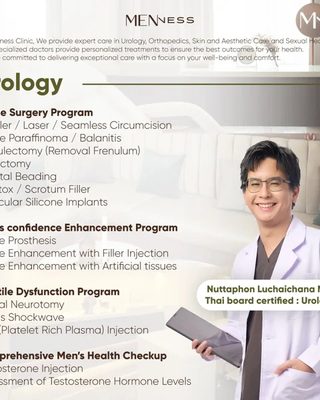 Nuttaphon Luchaichana | Menness Wellness Clinic Bangkok, Thailand | Orchiectomy; Removal of testicle tumor In practice since 2016 | Ask about treatment |
Programmes and prices
| Public programme | Clinic | Recorded price | Programme details | Request a quote |
|---|---|---|---|---|
| Testicular cancer | Valued Med Hub Hospitals | USD 4500Bookimed offer, Oct 2026 |
What the programme includesTesticular cancer Included: Removal of testicle tumor Included: Transfer airport-hotel-clinic-airport Excluded: Airfare Excluded: Hotel Excluded: Additional activities not included Excluded: Accommodation is not included Additional source terms: According to the patient’s reports, surgery is required urgently. Testicular excision will be performed on the patient. Before the surgery, sperm freezing will be followed by surgery. Depending on the pathology results, chemotherapy will be performed. Hospital: VM Bahçelievler Medical Park Doctor: Ass.Prof.Dr.Özkan ONUK Cost: – unilateral Orichectomy: 3600 USD – Sperm freezing: 900 USD TREATMENT PACKAGE AND DETAILS • Surgical Treatment fee • 1 day Standard Room, Nursing Service Charges • Procedure-related laboratory tests and radiology, • Medical equipment and supplies necessary for the procedure medication related procedure • Featured materials • 1 Accompanying person stays in the patient room • Pathology results will be out in 10 days |
Ask about treatment |
| Scrotal Tumor Analysis and Examination- Prof. Dr. Barış Nuhoğlu | Men’s Health Clinics | USD 1682.07Bookimed offer, Oct 2026 |
What the programme includesScrotal Tumor Analysis and Examination- Prof. Dr. Barış Nuhoğlu Included: Consultation with a urologist Included: Removal of testicle tumor Included: 4* Hotel Included: Transfer airport-hotel-clinic-airport Excluded: Airfare Excluded: Additional activities not included Stay: 1 days in the hospital Stay: 3 days in the hotel Source differences
|
Ask about treatment |
Research and sources
Sources (18)
- French AFU Cancer Committee Guidelines – Update 2024-2026: Testicular germ cell cancer.
- The Role of Frozen Section Examination During Inguinal Exploration in Men with Inconclusive Testicular Tumors: A Systematic Review and Meta-analysis.
- Treatment Outcomes for Men with Clinical Stage II Nonseminomatous Germ Cell Tumours Treated with Primary Retroperitoneal Lymph Node Dissection: A Systematic Review.
- Endocrine-disrupting chemicals and endocrine neoplasia: A forty-year systematic review.
- Testicular sperm extraction (TESE) outcomes in the context of malignant disease: a systematic review.
- Purging of malignant cell contamination prior to spermatogonia stem cell autotransplantation to preserve fertility: progress & prospects.
- Semen Cryopreservation in Testicular Cancer: Before or After Orchidectomy?
- Mullerian-Type Clear Cell Carcinoma in Late Metastasis of Testicular Teratoma: First Report of a Unique Association.
- Laterality and Breed Distribution of Cryptorchidism in 251 Dogs: A Retrospective Clinical Study.
- Metastatic Mixed Germ Cell Tumour in a Patient with Cryptorchidism and Persistent Müllerian Duct Syndrome.
- Metachronous renal cell carcinoma with delayed testicular metastasis coexisting with synchronous prostatic adenocarcinoma.
- Malignant nerve sheath tumor infiltrating the epididymis of an inguinal cryptorchid testis in a domestic shorthair cat.
- Intra-abdominal torsion of a cryptorchid testicle associated with teratoma in a rabbit (Oryctolagus cuniculus): A case report.
- Radical Orchiectomy and Testis-Sparing Surgery for Testicular Neoplasms
- Long-term Relapse and Survival in Clinical Stage I Testicular Teratoma.
- SMARCB1-deficient poorly differentiated testicular carcinoma: a case report.
- A rare instance of adenomatoid tumor of epididymis: a case report.
- [First diagnosis of renal cell carcinoma via a testicular metastasis].
Request a treatment proposal
Share your diagnosis and reports through the Bookimed request form.
Ask about treatment
Continue your guide
Related oncologic guides
Turn information into your next step.
Free Bookimed support. Compare options before deciding.
Free Bookimed support. Compare options before deciding.